

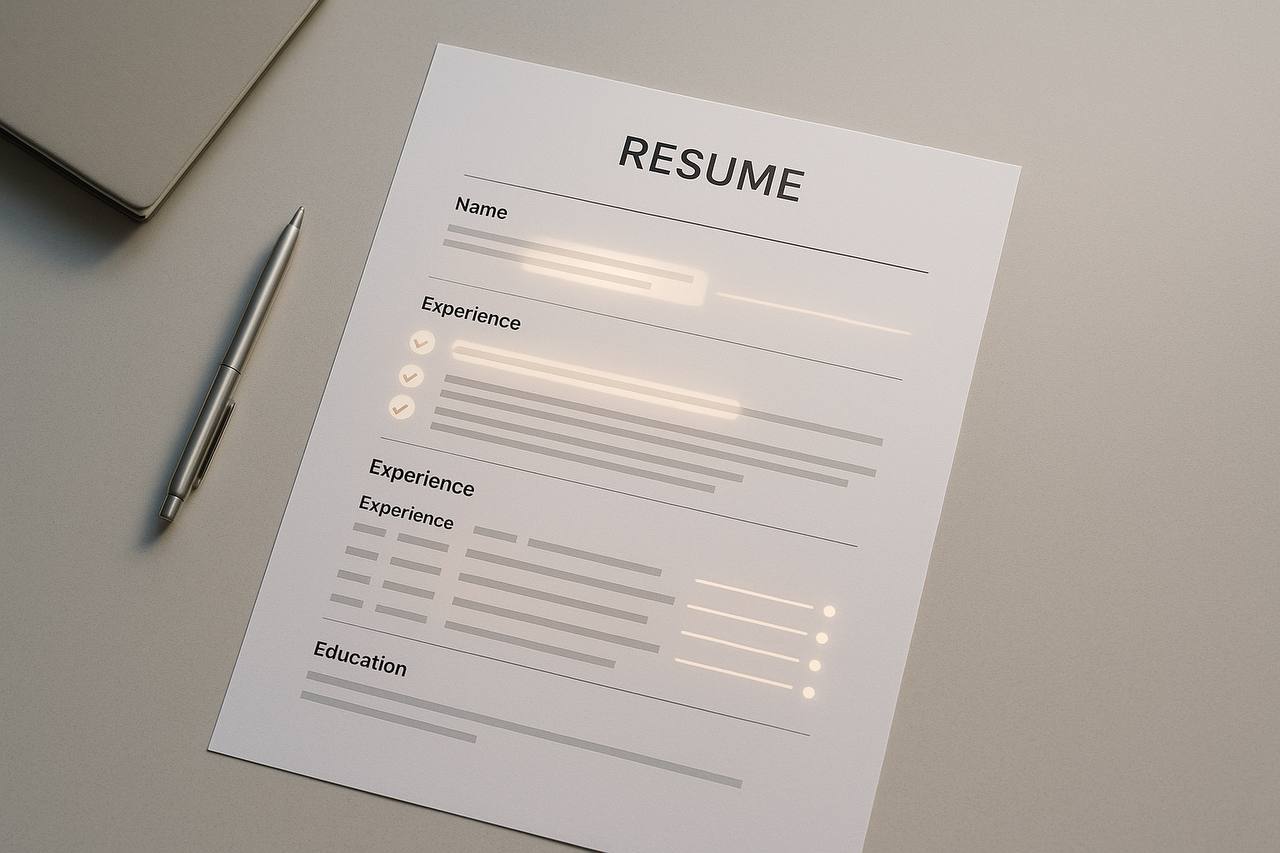
Why ATS Matters More Than Ever in 2026
By 2026, more than 92% of mid-to-large companies use Applicant Tracking Systems (ATS) as the first stage of candidate screening.
For job seekers, this means one thing:
Your resume is no longer read by a human first — it’s interpreted, scored, and filtered by software.
The good news?
Once you understand how ATS actually reads your resume, adapting becomes predictable — and dramatically increases your chances of getting interviews.
This guide breaks down how modern ATS systems parse resumes in 2026 and what you can do to optimize your resume for maximum visibility.
1. How Modern ATS Systems Read Resumes in 2026
Despite myths, ATS is not a magical black box.
It performs several very specific operations:
1.1 Parsing text layer-by-layer
ATS reads your resume in this order:
1. File structure → PDF, DOCX, or text version
2. Section titles → “Experience”, “Skills”, “Education”
3. Bullets & descriptions → using NLP to interpret meaning
4. Keywords → matching to the job description
5. Skills classification → mapping to internal skills taxonomy
6. Scoring → assigning an ATS score (fit score)
If formatting is broken, or the ATS can’t find sections, the resume loses points before anyone sees it.
1.2 How ATS extracts meaning (NLP models)
Modern ATS use machine-learning techniques like:
• keyword proximity
• semantic clustering
• taxonomy mapping (“communication skills” ↔ “client interaction”)
• sentiment/impact scoring (“increased”, “reduced”, “achieved”)
This matters because:
Writing generic responsibilities results in weak semantic signals,
while achievement-driven bullets are strongly weighted.
1.3 How ATS checks keyword relevance
ATS compares your resume to:
• required skills
• preferred skills
• responsibilities
• technical tools and platforms
Example:
If the job description mentions “project management, Jira, cross-functional teams”, ATS expects all three to appear in your resume.
If they don’t — match score drops.
2. Why Strong Candidates Fail ATS Without Realizing It
Here are the most common reasons candidates get filtered out before a recruiter sees the resume:
2.1 Wrong formatting
ATS fails on:
• tables and multi-column layouts
• images, logos, icons
• text inside shapes
• PDFs exported as images
• unusual section titles
If ATS can’t parse something, it simply ignores it — including vital achievements.
2.2 Missing alignment with the job description
Most resumes fail the match-score test because:
• keywords differ from the job description
• skills are grouped inconsistently
• responsibilities don’t match required competencies
Even strong experience looks irrelevant without keyword alignment.
2.3 Too generic, not achievement-driven
ATS models reward:
• impact verbs (achieved, reduced, led)
• quantifiable results
• metrics
• domain-specific verbs
Generic bullets (e.g., “responsible for…”) score poorly.
2.4 One resume for every job
In 2026, most ATS automatically detect “multi-role resumes” and downgrade them.
Companies want fit, not “jack-of-all-trades”.
3. How to Optimize Your Resume for ATS (2026 Best Practices)
This is where you can win easily — because most people still do it wrong.
3.1 Use an ATS-friendly format
The safest layout:
• single-column structure
• standard section titles
• no tables
• no icons or graphics
• DOCX or text-based PDF
3.2 Extract keywords from each job description
Look for:
• technical skills
• soft skills
• responsibilities
• tools and platforms
• certifications
Match them naturally in your experience bullets and skills section.
3.3 Rewrite bullets for impact
Bad (responsibility):
• Managed weekly reporting
Good (ATS-optimized):
• Led weekly reporting workflows, improving data accuracy by 18% and reducing manual processing time
3.4 Use consistent structure across sections
ATS reads best when you use:
• Company
• Role
• Dates
• Bullets
And avoid mixing formats.
3.5 Tailor your resume for each application
Modern ATS detect relevance patterns.
A tailored resume scores 30–60% higher.
But doing it manually is slow — which is why AI-tailoring tools exist.
4. How AI Tools Transform ATS Optimization in 2026
AI tools like CareerMagic solve the hardest part of job searching:
matching your resume to each job description automatically.
Here’s how AI enhances ATS visibility:
• Extracts job description keywords
• Rewrites bullets to match role requirements
• Ensures consistent formatting
• Creates role-specific versions instantly
• Improves impact verbs and metrics
• Runs an ATS-style scan
• Suggests missing skills
• Avoids keyword stuffing
What used to take 45–60 minutes per application takes seconds.
5. Final Checklist: Will Your Resume Pass ATS in 2026?
Your resume is ATS-ready if:
✓ Format is simple and readable
✓ All sections are clearly labeled
✓ Keywords match the job description
✓ Bullets show impact, not responsibilities
✓ Skills are specific and structured
✓ The resume is tailored for each role
✓ No images, icons, or multi-column layouts
✓ PDF contains real text, not images
If at least four of these are not true — job search success drops sharply.
Conclusion
ATS is no longer an obstacle — it’s a predictable system.
And once you understand how it reads resumes, you can dramatically increase your chances of getting interviews.
Modern hiring workflows favor:
• keyword alignment
• clarity
• impact
• tailored content
CareerMagic automates exactly these tasks, helping job seekers navigate high-volume job searches smarter and faster.
Leave a Reply